In recent years, home 3D printing has evolved from a niche hobby for engineers into an accessible tool for everyday users. While purchasing a 3D printer once required significant technical knowledge, today many devices are designed for beginners. Manufacturers have simplified interfaces, added automatic calibration, improved print stability, and reduced the number of manual settings.
The development of libraries of ready-made models has also played a role. You can download the desired object, load it into a print preparation program, and get a finished product without any 3D modeling skills. Nowadays, a 3D printer is increasingly perceived as a household tool—much like a drill, coffee maker, or food processor.
The decline in equipment costs has also accelerated the spread of the technology. Basic printer models have become affordable, while print quality has improved significantly. As a result, 3D printing is gradually becoming a part of everyday life: it is used for repairs, customization, creating accessories, and educational projects. However, the technology is still evolving. Manufacturers are experimenting with new materials, increasing print speeds, and adding intelligent features that make the process even simpler and more predictable.
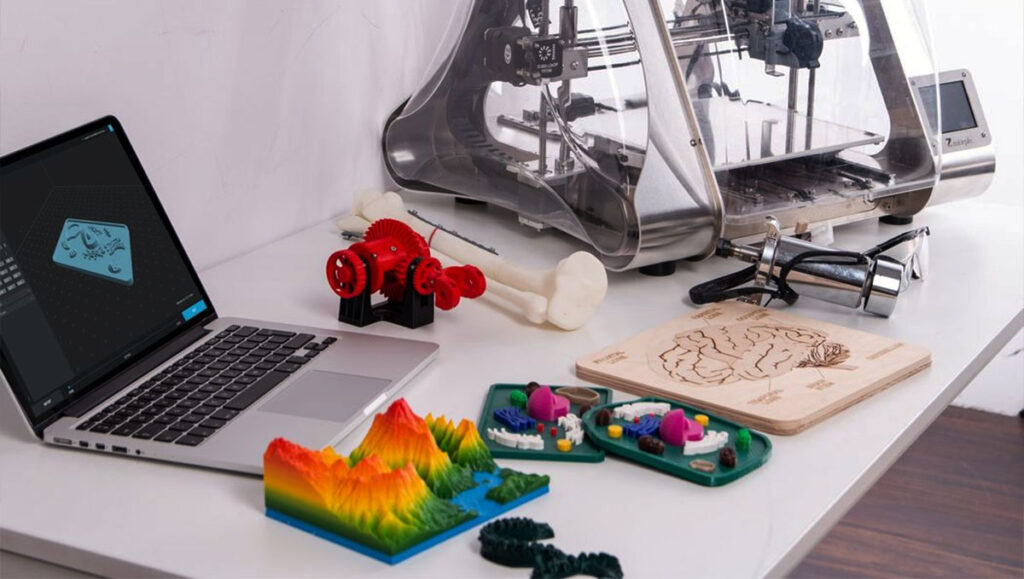
What can you print at home right now?
Practical application is the main driver of home 3D printing’s popularity. Useful household items are trending, replacing non-decorative elements. This allows you to save money and quickly obtain the parts you need without spending a lot of time searching in stores. Today, you can print at home:
- Storage organizers
- Holders for smartphones and gadgets
- Spare plastic parts for household appliances
- Furniture and appliance fasteners
- Hooks, latches, and fasteners
- Toys and figurines
- Plant pots and accessories
- Enclosures for homemade electronics
- Kitchen accessories
- Educational models of mechanisms and geometric shapes
Printing small repair parts is especially popular. For example, if a plastic fastener breaks, it is often impossible to buy it separately. 3D printing allows you to repair the device in a few hours. Personalization is also rapidly developing. Users can adjust the size of a model to suit their needs. For example, they can make a holder for a specific smartphone or create an organizer that fits the dimensions of a specific drawer.
Limitations of Printing Technology
Despite its advances, home 3D printing still has its limitations. The most important is the materials. Most home printers print with plastic. It’s durable enough for everyday tasks, but inferior to metal in terms of durability and load-bearing capacity. There are also temperature limitations. Some plastics begin to deform when heated, so not all products are suitable for use near heat sources.
Print speed is another factor. Even a small part can take about an hour to print. Larger objects can take tens of hours to print. This is not mass production, but rather custom manufacturing. During printing, the plastic heats up to high temperatures. Therefore, the printer must be placed on a stable surface, and the room should preferably be well-ventilated.
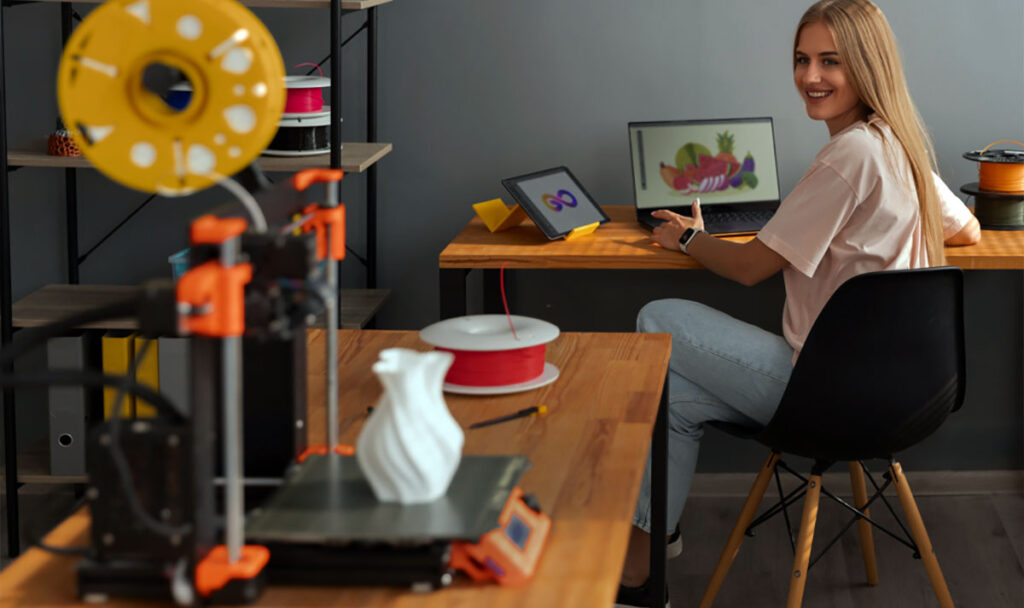
Ecosystem of Models, Communities, and Digital Libraries as a Driver of Development
One factor rarely discussed when discussing home 3D printing is the influence of user communities and model libraries. They are the ones who have made the technology mainstream. If you had to create every model from scratch, 3D printing would remain a niche tool for engineers and designers.
Today, there are many open libraries where users publish their models for free or for a small fee. This creates a network economy: the more users create models, the more useful the technology becomes for everyone else. A beginner can start printing on the first day of purchasing a printer, without spending months learning modeling.
Communities also accelerate technology development through shared experience. Users share print settings, material tips, and ready-made profiles for specific printer models. This lowers the barrier to entry and reduces the number of errors that were once inevitable. Furthermore, a culture of “distributed production” is emerging around home 3D printing. People are organizing local workshops, sharing files, and printing parts for one another. In the future, this could lead to the emergence of digital marketplaces for physical items, where, instead of shipping, only the model file will be transferred.
Future of Home 3D Printing and Technological Development
Technology is advancing in several directions.
- The first is automation. Printers are already appearing that automatically adjust print parameters, minimizing the risk of user error.
- The second direction is new materials. More durable, heat-resistant plastics and composite materials are being developed. This will expand the range of applications for home printers.
- The third direction is ecology. Increasing attention is being paid to plastic recycling. Devices are emerging that allow the creation of printing material from plastic waste.
In the future, home 3D printing may become part of the concept of home mini-production. Users will be able to scan objects, edit them, and recreate them. This will change the approach to repairing things and reduce dependence on mass production. It’s highly likely that in a few years, a home 3D printer will be perceived as natural as a regular document printer. The technology is gradually becoming faster, cheaper, and easier to use, making it more accessible to the masses.